

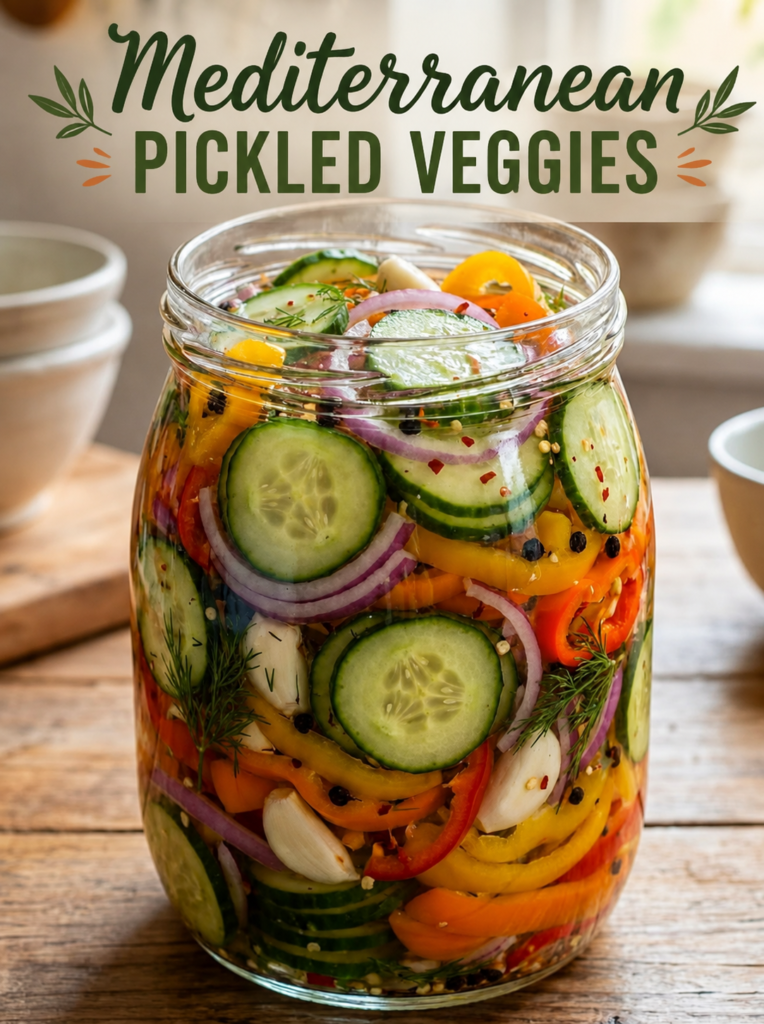
Mediterranean Pickled Vegetables
These Mediterranean Pickled Vegetables are crisp, tangy, colorful, and packed with garlic, herbs, and bright lemony flavor. A mix of carrots, cauliflower, cucumber, bell pepper, and red onion is soaked in a simple vinegar brine with garlic, oregano, coriander, and a touch of chili.
They’re an easy way to add a punch of flavor to sandwiches, grain bowls, salads, grilled meats, wraps, and mezze platters. The recipe is quick to prepare and gets even better after a day or two in the refrigerator.
Important: This is a refrigerator pickle, not a shelf-stable canning recipe. Keep it refrigerated and don’t store it at room temperature.
Time
Prep Time: 20 minutes
Cook Time: 5 minutes
Total Time: About 4 hours 25 minutes
Makes: About 1½–2 quarts
Ingredients
For the Vegetables
2 cups cauliflower florets, cut small
2 medium carrots, peeled and thinly sliced
1 small cucumber, sliced
1 red bell pepper, thinly sliced
½ small red onion, thinly sliced
3–4 garlic cloves, lightly crushed
1 small jalapeño or chili pepper, sliced — optional
2 tbsp fresh parsley, chopped
1 tbsp fresh dill, chopped — optional
For the Pickling Brine
1½ cups white vinegar
½ cup water
1½ tbsp kosher salt
1 tbsp sugar or honey
1 tsp dried oregano
1 tsp coriander seeds
½ tsp black peppercorns
½ tsp red pepper flakes — optional
1 bay leaf
1 tbsp fresh lemon juice
For Finishing
1–2 tbsp extra-virgin olive oil
Fresh parsley
Fresh dill
Lemon wedges
Instructions
1. Prepare the Vegetables
Wash and thoroughly dry all the vegetables.
Cut the cauliflower into small florets and slice the carrots, cucumber, bell pepper, and red onion into pieces that are easy to eat.
For a more attractive jar, keep the vegetables in separate sections while preparing them.
2. Blanch the Cauliflower and Carrots
Bring a large pot of water to a boil.
Add the cauliflower and carrots and cook for about 1–2 minutes. You want them slightly tender but still crisp.
Immediately drain and transfer them to a bowl of ice water.
Drain again and pat dry.
Don’t skip the drying step. Excess water can dilute the pickling brine.
3. Make the Pickling Brine
Add the vinegar, water, salt, sugar, oregano, coriander seeds, peppercorns, red pepper flakes, and bay leaf to a saucepan.
Bring to a gentle simmer over medium heat, stirring until the salt and sugar dissolve.
Remove from the heat.
Stir in the fresh lemon juice.
4. Pack the Jars
Divide the garlic, vegetables, jalapeño, parsley, and dill between clean glass jars or containers.
Pack them fairly tightly, but don’t crush the vegetables.
Leave some space at the top.
5. Add the Brine
Carefully pour the warm pickling liquid over the vegetables until they’re completely covered.
Gently tap the jars or use a clean utensil to release trapped air bubbles.
Make sure the vegetables remain submerged beneath the brine.
6. Cool and Refrigerate
Let the jars cool uncovered until they’re no longer hot.
Cover tightly and refrigerate.
The vegetables will have a light pickle flavor after about 4 hours, but they’ll taste much better after 24–48 hours.
7. Finish and Serve
When you’re ready to serve, remove the vegetables from the brine and arrange them on a platter.
Drizzle lightly with extra-virgin olive oil and sprinkle with fresh parsley or dill.
Serve with lemon wedges.
Notes
White vinegar gives these pickles a clean, bright flavor. Apple cider vinegar can be used for a slightly sweeter, fruitier taste.
For a more traditional Mediterranean profile, don’t skip the garlic, oregano, coriander, and lemon.
The vegetables should remain crisp, not soft.
Use glass jars or food-safe containers rather than reactive metal containers for storing the pickles.
Keep the vegetables submerged under the brine and refrigerated.
Because this recipe isn’t processed using a tested canning method, don’t store these pickles at room temperature.
Tips for the Best Pickled Vegetables
Keep them crunchy
Only blanch the cauliflower and carrots briefly. The cucumber, pepper, and onion don’t need to be cooked.
Slice evenly
Similar-sized pieces pickle at a similar rate and make the finished jar look much prettier.
Give them time
They’re edible after a few hours, but 24–48 hours gives the vinegar, garlic, herbs, and spices time to penetrate the vegetables.
Don’t overdo the sugar
The sugar isn’t meant to make these sweet. It simply softens the sharp edge of the vinegar.
Make them colorful
Use a mixture of green, red, orange, and white vegetables for a beautiful Mediterranean-style pickle assortment.
Frequently Asked Questions
How long do Mediterranean pickled vegetables last?
Keep them continuously refrigerated and use clean utensils when serving. For best quality, enjoy them within about 2–3 weeks.If you notice mold, an unusual smell, bubbling/fermentation, or other signs of spoilage, discard them.
Do I have to blanch the vegetables?
No. You can leave everything raw for an extra-crunchy pickle. Blanching the carrots and cauliflower simply makes them a little more tender and helps the brine penetrate.
Can I use different vegetables?
Absolutely. Try adding:
- Radishes
- Green beans
- Celery
- Turnips
- Fennel
- Cabbage
- Cherry tomatoes
- Banana peppers
Can I make them spicy?
Yes. Add sliced jalapeno, serrano pepper, or additional red pepper flakes. For a milder pickle, leave out the chili altogether.
Can I reduce the vinegar?
For refrigerator pickles, it’s best to keep the vinegar-to-water balance as written rather than substantially reducing the vinegar. The acidity is an important part of the pickling process.
Can I use apple cider vinegar?
Yes. It will give the pickles a slightly sweeter and more rounded flavor.
Can I use dried herbs?
Yes. Dried oregano works especially well. Fresh parsley and dill are best added for serving because their flavor and color are brighter.
Are these fermented pickles?
No. These are quick refrigerator pickles made with a vinegar-based brine. They aren’t fermented.
Can I can these for long-term storage?
Don’t use this recipe for shelf-stable canning. Proper canning requires a tested recipe with verified acidity and processing instructions.
Nutritional Information
Calories: 35–50 kcal
Protein: 1g
Carbohydrates: 8–10g
Fat: 0g
Fiber: 2–3g
Sugar: 4–6g
Sodium: 600–750mg
Easy Variations
Greek-Style Pickles
Add Kalamata olives, oregano, lemon zest, and a few strips of roasted red pepper.
Spicy Mediterranean Pickles
Add extra chili flakes, sliced jalapeño, and a pinch of smoked paprika.
Extra-Garlic Pickles
Add 1–2 additional crushed garlic cloves for a stronger savory flavor.
Lemon Herb Pickles
Add extra lemon zest, fresh dill, parsley, and a little more lemon juice after pickling.
Antipasto-Style Vegetables
Add artichoke hearts, roasted peppers, olives, and marinated mushrooms just before serving.
Serving Suggestions
These pickled vegetables are especially good:
Alongside hummus and warm pita
In a Mediterranean mezze platter
Inside chicken or turkey wraps
On grilled chicken sandwiches
Over rice or quinoa bowls
With falafel
Alongside grilled fish or shrimp
Chopped into tuna or egg salad
On burgers or veggie burgers
As a bright topping for salads
Simple Serving Idea
Pile the pickled vegetables onto a platter with hummus, feta, olives, warm pita, cucumber, tomatoes, and grilled chicken. Drizzle everything with olive oil and lemon for an easy Mediterranean-inspired meal.