

Best At-Home Strength Exercises for Beginners
(No Gym Required)
You don’t need a gym membership, a rack of dumbbells, or an hour of free time to get stronger. Some of the most effective strength training in the world uses nothing but your own body weight and a few feet of floor space.
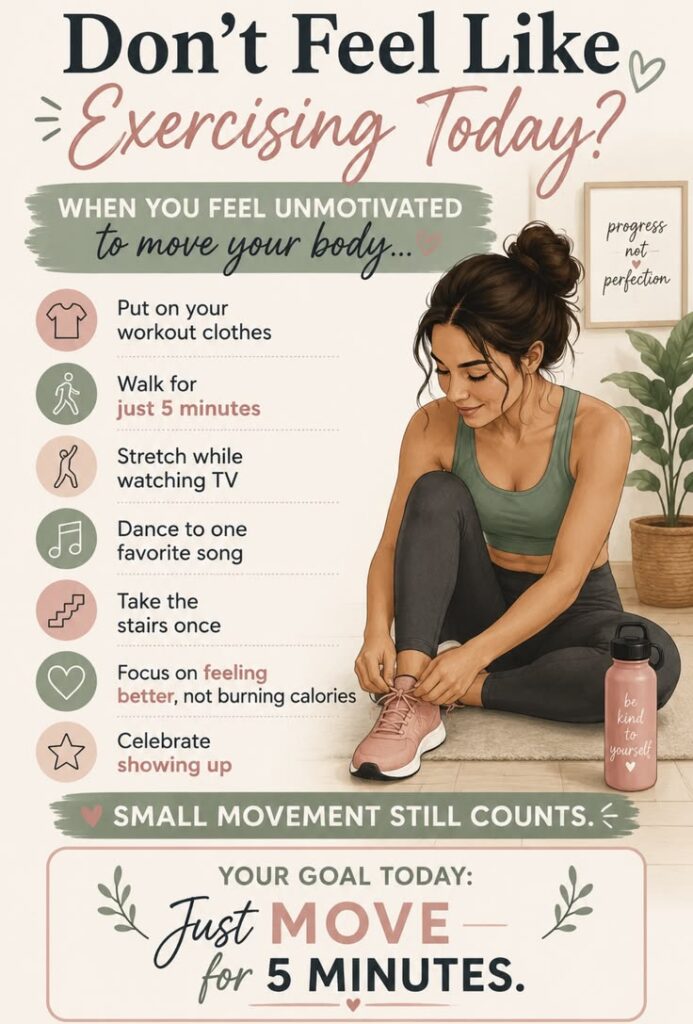
More Americans are training at home than ever — (no commute, no waiting for equipment, no monthly fees). And strength training isn’t just about looking toned. It builds bone density, protects your joints, speeds up your metabolism, and keeps you functional as you age. The CDC recommends muscle-strengthening activity at least two days a week for adults, and bodyweight training checks that box completely.
This best at home exercises for strength is built for real beginners: people who’ve never lifted before, people restarting after a break, and people who just want a simple, no-nonsense plan that works. Inside, you’ll find 14 beginner-friendly strength exercises with step-by-step form cues, three ready-to-follow workout plans (15, 20, and 30 minutes), modifications for every fitness level, and answers to the questions people search for most.
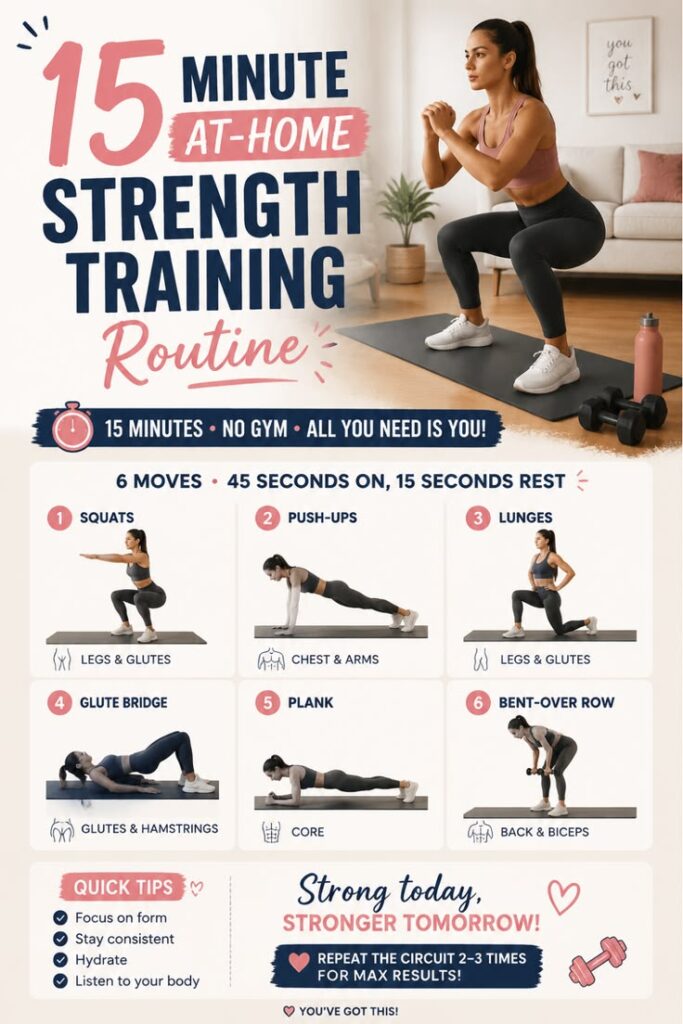
Best At-Home Strength Exercises
1. Squats
Muscles worked:
- Quads
- glutes
- hamstrings
- core
Difficulty:
Beginners
Instructions:
1. Stand with feet shoulder-width apart, toes slightly turned out.
2. Push your hips back and bend your knees as if sitting into a chair.
3. Lower until thighs are parallel to the floor (or as low as comfortable).
4. Drive through your heels to stand back up.
Common mistakes:
- Letting knees cave inward
- lifting heels off the floor
Reps/Sets:
3 sets of 10–15 reps
Beginner modification:
Squat to a chair seat for depth guidance.
Safety tip:
Keep your chest lifted and weight in your heels.
Coaching cue:
“Sit back, not down.”
2. Push-Ups
Muscles worked:
- Chest
- shoulders
- triceps
- core
Difficulty:
Beginner to intermediate
Instructions:
1. Start in a high plank with hands slightly wider than shoulders.
2. Lower your body until your chest nearly touches the floor.
3. Push back up to the starting position, keeping your core tight.
Common mistakes:
- Sagging hips
- flaring elbows too wide.
Reps/Sets:
3 sets of 8–12 reps
Beginner modification:
Perform on knees or against a wall/countertop.
Safety tip:
Keep your neck neutral, eyes slightly ahead of your hands.
Coaching cue:
“Push the floor away.”
3. Lunges
Muscles worked:
- Quads
- glutes
- hamstrings
- balance
Difficulty:
Beginners
Instructions:
1. Step one foot forward and lower until both knees form 90-degree angles.
2. Keep your front knee over your ankle, not past your toes.
3. Push through your front heel to return to standing.
Common mistakes:
- Taking too short a step
- leaning forward.
Reps/Sets:
3 sets of 10 reps per leg
Beginner modification:
Hold onto a wall or chair for balance.
Safety tip:
Keep your torso upright throughout the movement.
Coaching cue:
“Drop straight down, not forward.”
4. Glute Bridges
Muscles worked:
- Glutes
- hamstrings
- core
Difficulty:
Beginner
Instructions:
1. Lie on your back,knees bent,feet flat on the floor.
2. Squeeze your glutes and lift your hips toward the ceiling.
3. Pause at the top, then lower with control.
Common mistakes:
- Overarching the lower back
- rushing the movement.
Reps/Sets:
3 sets of 12–15 reps
Beginner modification:
Reduce range of motion.
Safety tip:
Squeeze glutes, not lower back, to lift.
Coaching cue:
“Drive your hips to the sky.”
5. Plank
Muscles worked:
- Core
- shoulders
- glutes
Difficulty:
Beginner to intermediate
Instructions:
1. Rest on forearms and toes, body in a straight line.
2. Engage your core and squeeze your glutes.
3. Hold the position, breathing steadily.
Common mistakes:
- Hips sagging
- piking up.
Reps/Sets:
3 rounds of 20–45 seconds
Beginner modification:
Drop to knees.
Safety tip:
Don’t hold your breath.
Coaching cue:
“Imagine a straight line from head to heels.”
6. Dead Bug
Muscles worked:
- Deep core
- hip flexors
Difficulty:
Beginner
Instructions:
1. Lie on your back, arms extended toward the ceiling, knees bent at 90 degrees.
2. Slowly lower your right arm and left leg toward the floor.
3. Return to start and switch sides.
Common mistakes:
- Letting the lower back arch off the floor.
Reps/Sets:
3 sets of 8–10 reps per side
Beginner modification:
Move only the legs, keep arms still.
Safety tip:
Press your low back into the floor throughout.
Coaching cue:
“Move slow, stay flat.”
7. Superman
Muscles worked:
- Lower back
- glutes
- shoulders
Difficulty:
Beginner
Instructions:
1. Lie face down, arms extended in front of you.
2. Simultaneously lift your arms, chest, and legs off the floor.
3. Hold briefly, then lower with control.
Common mistakes:
- Jerking upward instead of lifting smoothly.
Reps/Sets:
3 sets of 10–12 reps
Beginner modification:
Lift arms and legs separately.
Safety tip:
Keep the movement small and controlled.
Coaching cue:
“Lift and lengthen, don’t yank.”
8. Wall Sit
Muscles worked:
- Quads
- glutes
- core (isometric)
Difficulty:
Beginner to intermediate
Instructions:
1. Lean your back against a wall and slide down until knees form a 90-degree angle.
2. Hold the position with thighs parallel to the floor.
3. Keep your core engaged throughout.
Common mistakes:
- Knees extending past toes.
Reps/Sets:
3 rounds of 20–45 seconds
Beginner modification:
Use a higher sit angle.
Safety tip:
Keep feet flat and shoulder-width apart.
Coaching cue:
“Sit into an invisible chair.”
9. Pike Push-Ups
Muscles worked:
- Shoulders
- triceps
- upper back
Difficulty:
Intermediate
Instructions:
1. Start in a downward-dog position, hips high.
2. Bend elbows to lower the top of your head toward the floor.
3. Push back up to the starting position.
Common mistakes:
- Flat back instead of a high hip pike.
Reps/Sets:
3 sets of 6–10 reps
Beginner modification:
Reduce range of motion.
Safety tip:
Keep wrists stacked under shoulders.
Coaching cue:
“Head toward the floor, hips stay high.”
10. Bulgarian Split Squat
Muscles worked:
- Quads
- glutes
- balance
Difficulty:
Intermediate
Instructions:
1. Place one foot behind you on a chair or step.
2. Lower your back knee toward the floor, front knee bending to 90 degrees.
3. Push through your front heel to stand.
Common mistakes:
- Placing the back foot too high
- straining the knee.
Reps/Sets:
3 sets of 8–10 reps per leg
Beginner modification:
Use a lower support surface.
Safety tip:
Keep most of your weight on the front leg.
Coaching cue:
“Drop straight down between two points.”
11. Resistance Band Row
Muscles worked:
- Upper back
- biceps
- rear shoulders
Difficulty:
Beginner
Instructions:
1. Anchor a band around a sturdy object at chest height.
2. Pull the band toward your ribs, squeezing your shoulder blades.
3. Return slowly to the starting position.
Common mistakes:
- Using momentum instead of controlled pulling.
Reps/Sets:
3 sets of 12–15 reps
Beginner modification:
Use a lighter band.
Safety tip:
Keep elbows close to your body.
Coaching cue:
“Squeeze a pencil between your shoulder blades.”
12. Hip Hinge (Good Morning)
Muscles worked:
- Hamstrings
- glutes
- lower back
Difficulty:
Beginner to intermediate
Instructions:
1. Stand with feet hip-width apart, slight bend in the knees.
2. Push your hips back while lowering your torso, keeping your back flat.
3. Reverse the motion, squeezing your glutes to stand.
Common mistakes:
- Rounding the spine.
Reps/Sets:
3 sets of 10–12 reps
Beginner modification:
Reduce range of motion.
Safety tip:
Hinge at the hips, not the waist.
Coaching cue:
“Push a door closed with your hips.”
13. Calf Raises
Muscles worked:
- Calves
Difficulty:
Beginner
Instructions:
1. Stand tall, feet hip-width apart.
2. Rise onto the balls of your feet as high as possible.
3. Lower slowly with control.
Common mistakes:
- Bouncing instead of controlled reps.
Reps/Sets:
3 sets of 15–20 reps
Beginner modification:
Hold a wall for balance.
Safety tip:
Move through a full range of motion.
Coaching cue:
“Press through your big toe.”
14. Mountain Climbers
Muscles worked:
- Core
- shoulders
- cardio conditioning
Difficulty:
Beginner to intermediate
Instructions:
1. Start in a high plank position.
2. Drive one knee toward your chest, then switch legs quickly.
3. Keep your core tight and hips low throughout.
Common mistakes:
- Hips bouncing up and down.
Reps/Sets:
3 sets of 30–40 seconds
Beginner modification:
Slow the pace to a controlled walk.
Safety tip:
Keep hands directly under shoulders.
Coaching cue:
“Run the floor, not the air.”
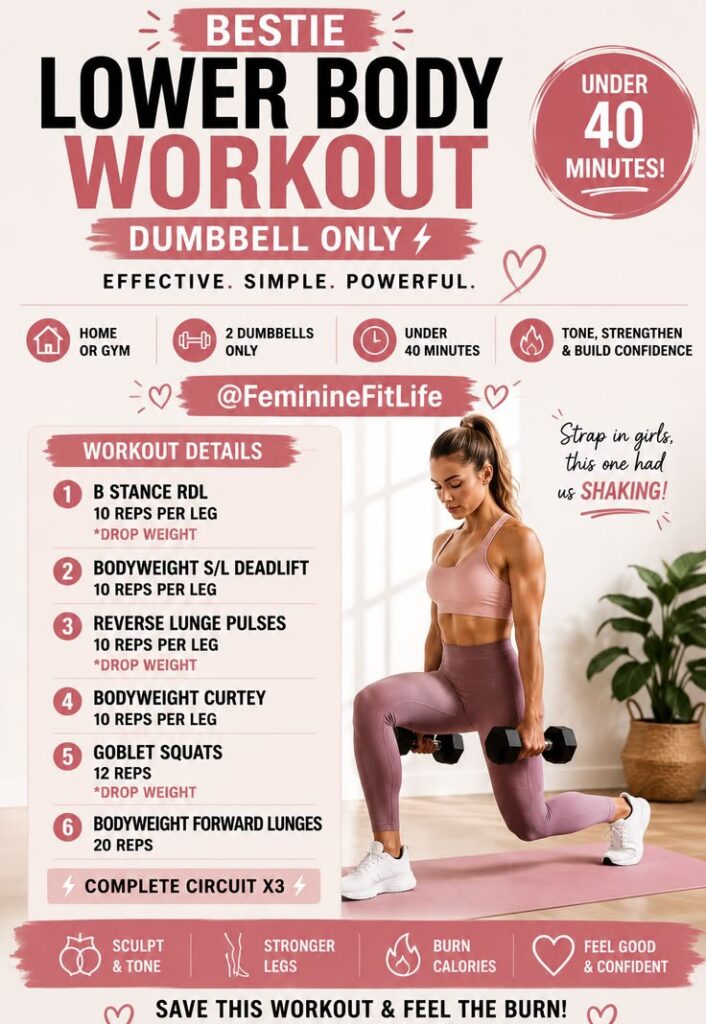
Beginner Workout Plans
15-Minute Workout:
Warm-up: 2 minutes marching in place + arm circles
Squats: 10 reps
Push-ups: 8 reps
Glute bridges: 12 reps
Plank: 20 seconds
(Repeat circuit 2 times, resting 30 seconds between rounds)
Cool-down: 2 minutes stretching
20-Minute Workout
Warm-up: 3 minutes light cardio + dynamic stretches
Squats — 12 reps
Lunges — 10 reps per leg
Push-ups — 10 reps
Resistance band row — 12 reps
Plank — 30 seconds
(Repeat circuit 3 times, resting 30–45 seconds between rounds)
Cool-down: 3 minutes stretching
30-Minute Workout:
Warm-up: 5 minutes light cardio + mobility drills
Squats — 15 reps
Bulgarian split squat — 8 reps per leg
Push-ups — 12 reps
Hip hinge — 12 reps
Dead bug — 10 reps per side
Wall sit — 30 seconds
Mountain climbers — 30 seconds
(Repeat circuit 3 times, resting 45 seconds between rounds)
Cool-down: 5 minutes stretching
Variations
Beginner:
Reduce reps, use modifications, focus on form
Intermediate:
Standard reps/sets as listed above
Advanced:
Add dumbbells, slow tempo, reduce rest
Senior-friendly:
Chair-assisted squats and sit-to-stands, wall push-ups
Overweight-friendly:
Low-impact versions, focus on isometric holds
Knee-friendly:
Glute bridges instead of lunges, wall sits with shallow angle
Low-impact:
Remove jumping and mountain climber speed variations
High-intensity:
Shorten rest periods, add mountain climbers or burpees
Resistance-band version:
Add bands to squats, rows, and glute bridges
Dumbbell version:
Add dumbbells to squats, lunges, and hip hinges
Common Mistakes
1. Poor form: Prioritize technique over speed or reps
2. Going too fast: Controlled reps build more strength than rushed ones
3. Holding your breath: Exhale on exertion, inhale on the return
4. Poor posture: Keep your spine neutral throughout each movement
5. Lack of recovery: Muscles grow during rest, not just during training
6. Skipping warm-up: Increases injury risk and reduces performance
7. Not progressing: Add reps, sets, or resistance as exercises get easier
8. Incorrect range of motion: Partial reps limit strength gains
Expert Tips
- Master.. bodyweight form before adding resistance.
- Progress.. gradually — add one variable (reps, sets, or weight) at a time.
- Train.. major muscle groups at least twice a week.
- Prioritize.. compound movements like squats and push-ups.
- Rest.. 48 hours between sessions targeting the same muscles.
- Warm up.. for 5 minutes before every session.
- Focus.. on controlled tempo, especially on the lowering phase.
- Track.. your workouts to monitor progress.
- Don’t.. skip core and stabilizer exercises like the dead bug.
- Breathe.. steadily; never hold your breath under tension.
- Stay.. consistent — 3 sessions a week beats 1 intense session.
- Stretch.. after workouts, not just before.
- Stay.. hydrated throughout the day, not just during training.
- Sleep.. 7–9 hours to support muscle recovery.
- Celebrate.. small wins like an extra rep or better form.
Health Benefits
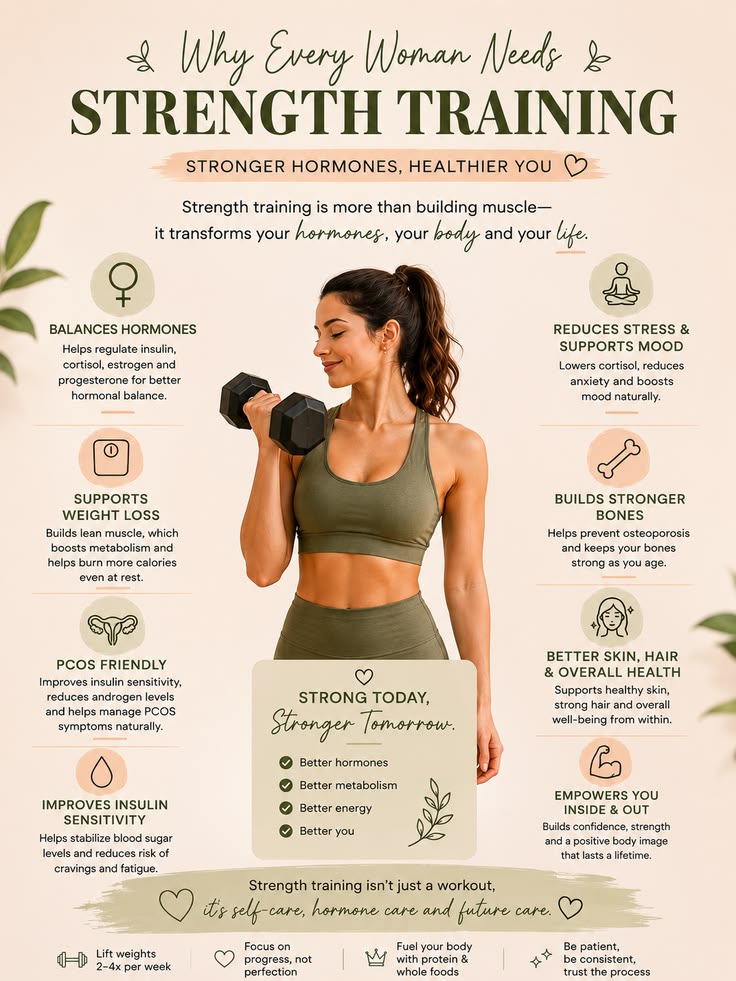
Regular strength training offers benefits well beyond appearance:
Stronger muscles:
Builds lean muscle mass and functional strength
Bone health:
Weight-bearing movement supports bone density
Better metabolism:
Muscle tissue burns more calories at rest
Fat loss support:
Strength training complements calorie management
Heart health:
Resistance training supports cardiovascular markers
Better balance:
Reduces fall risk, especially with age
Improved posture:
Strengthens postural muscles in the back and core
Reduced injury risk:
Stronger joints and connective tissue
Mental health:
Exercise is linked to reduced stress and better mood
Healthy aging:
Preserves mobility and independence over time
Nutrition Tips
Pre-workout snack:
Banana with peanut butter or Greek yogurt with berries
Post-workout meal:
Lean protein + complex carbs, like chicken and rice or eggs and whole-grain toast
Protein intake:
Aim for a source of protein at each meal to support muscle repair
Hydration:
Drink water before, during, and after training
Recovery foods:
Include anti-inflammatory foods like leafy greens, berries, and fatty fish
Frequently asked questions FAQs
Can you build muscle at home without weights?
Yes. Bodyweight exercises like push-ups and squats create enough resistance to build strength and muscle, especially for beginners.
How often should beginners strength train at home?
Most beginners benefit from 2–4 sessions per week with rest days in between.
What is the best bodyweight exercise for full-body strength?
Squats are often considered the most effective single bodyweight exercise, engaging the legs, glutes, and core.
How long until I see results from home strength training?
Many people notice strength improvements within 2–4 weeks, with visible changes often appearing around 6–8 weeks.
Do I need dumbbells to get stronger?
No. Dumbbells help with progression, but bodyweight training alone can build significant strength.
Can beginners do these exercises safely?
Yes, as long as modifications are used and form is prioritized over speed or reps.
Is it normal to be sore after starting strength training?
Mild soreness (DOMS) is common when starting out and typically fades within a few days.
Can I do these exercises every day?
It’s better to allow rest days so muscles can recover and rebuild.
Do bodyweight exercises burn fat?
They can support fat loss when combined with a balanced diet and consistent activity.
Can seniors do at-home strength training?
Yes, with appropriate modifications like chair-assisted squats and wall push-ups.
What’s the difference between strength training and cardio?
Strength training builds muscle and power; cardio primarily improves heart and lung endurance. Both are valuable.
Expert Notes
Progression tips: Increase reps first, then sets, then add resistance.
Deload weeks: Every 4–6 weeks, reduce intensity for a week to aid recovery.
Recovery advice: Prioritize sleep, hydration, and protein intake.
Stretching: Add 5–10 minutes of stretching after each session.
Sleep: Aim for 7–9 hours nightly to support muscle repair.
Injury prevention: Never skip warm-ups, and stop if you feel sharp pain.
Weekly Schedule:
Monday: Full-body strength (20-min workout)
Tuesday: Rest or light walk
Wednesday: Full-body strength (30-min workout)
Thursday: Rest or mobility work
Friday: Full-body strength (15-min workout)
Saturday/Sunday: Rest or active recovery